
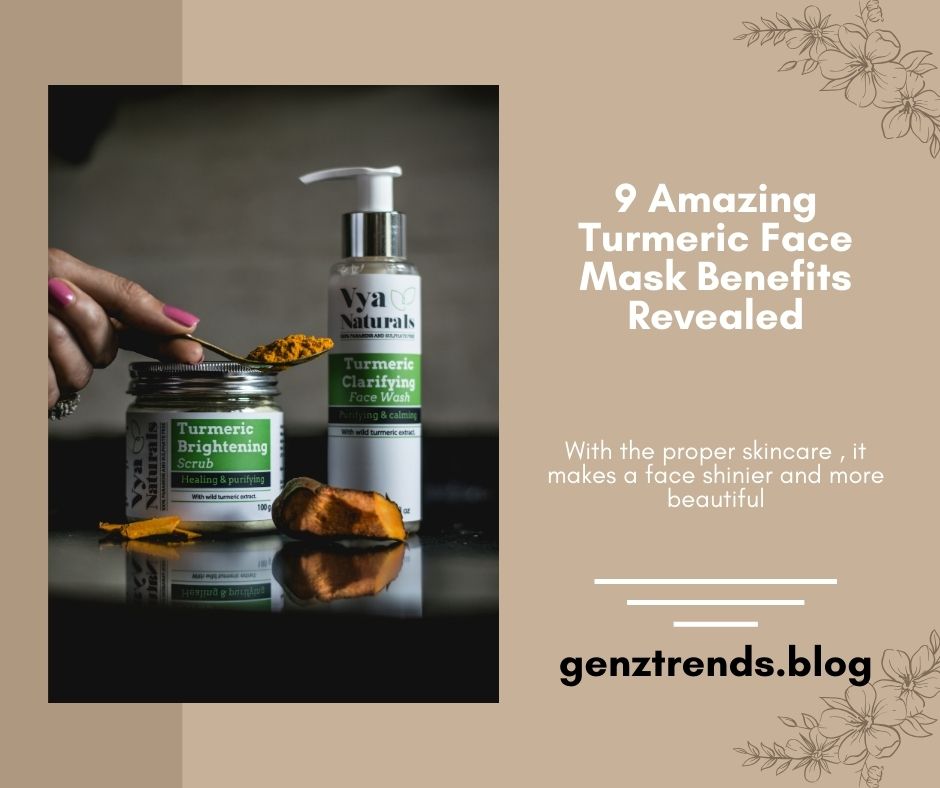
Acne that refuses to clear. Dark spots that seem permanent. A dull, flat complexion that no moisturiser or highlighter can fix. These are the skin concerns that millions of people wake up to every morning — and they are also the concerns that one ancient, golden ingredient has been quietly solving for over 4,000 years.
The 9 amazing turmeric face mask benefits revealed in this guide explain why turmeric has moved from your kitchen spice rack to the front line of modern natural skincare. This vivid yellow root — a cornerstone of Ayurvedic herbal skin treatment for millennia — is experiencing a global revival as people increasingly turn to DIY face mask solutions that are effective, transparent about their ingredients, and free from synthetic chemicals.
Turmeric face mask for glowing skin is one of the most searched skincare queries in the world today, and the science behind that interest is compelling. The active compound curcumin delivers natural brightening remedy action through multiple mechanisms simultaneously, its anti-inflammatory skincare properties are documented across hundreds of clinical studies, and its antioxidant capacity rivals many of the most expensive serums on the market. Whether you are dealing with breakouts, pigmentation, oiliness, or simply a complexion that has lost its luminosity, a good turmeric face mask addresses all of these concerns from a single source.
These are the 9 benefits — science-backed, clearly explained, and ready to transform your relationship with your own skin.
SECTION 1: WHAT MAKES TURMERIC A SKINCARE POWERHOUSE?
What Makes Turmeric a Skincare Powerhouse?
Before exploring the 9 specific benefits, it is worth understanding why turmeric works as well as it does. The answer begins with one remarkable molecule.
CURCUMIN: THE ACTIVE COMPOUND THAT DOES EVERYTHING
Curcumin is the polyphenolic compound responsible for turmeric’s characteristic golden colour — and it is also responsible for virtually all of its medicinal and cosmetic properties. Curcumin for skin works through multiple documented pathways: it inhibits inflammatory enzymes (particularly COX-2 and LOX), scavenges free radicals, inhibits tyrosinase (the enzyme responsible for excess melanin production), and stimulates fibroblast activity for collagen synthesis.
What makes curcumin particularly extraordinary for skincare is that it operates on all of these pathways simultaneously, rather than targeting a single concern. This is why a curcumin face mask or curcumin mask addresses such a wide range of skin issues — from acne to aging to pigmentation — in a single treatment.
ANTI-INFLAMMATORY PROPERTIES
One of turmeric’s most significant skin benefits — and the one most thoroughly backed by clinical research — is its anti-inflammatory action. Chronic low-grade inflammation in the skin is the underlying driver of acne, redness, premature aging, and hyperpigmentation. Curcumin interrupts the inflammatory cascade at multiple points, reducing the production of pro-inflammatory cytokines and calming the skin at a cellular level. This anti-inflammatory skincare effect is why turmeric is so consistently effective across such diverse skin concerns.
ANTIOXIDANT PROTECTION
As an antioxidant-rich skincare ingredient, turmeric competes favourably with many of the most celebrated actives in modern dermatology. Curcumin neutralises multiple classes of free radicals — reactive oxygen species, reactive nitrogen species, and lipid peroxides — that cause collagen degradation, DNA damage, and the pigmentation changes that manifest as dark spots and uneven skin tone. Regular topical application builds a cumulative antioxidant defence that protects skin from both immediate and long-term environmental damage.
ANTIBACTERIAL EFFECTS
Turmeric has been shown in laboratory and clinical research to exhibit meaningful antibacterial activity against Cutibacterium acnes — the primary bacteria responsible for acne breakouts. This action, combined with its anti-inflammatory properties, makes turmeric a multi-vector treatment for acne that addresses the infection and the inflammation simultaneously, rather than just one or the other.
SKIN BRIGHTENING SUPPORT
Turmeric benefits for skin in terms of brightening stem primarily from curcumin’s tyrosinase-inhibiting action. By slowing the enzyme that catalyses melanin synthesis, turmeric gradually reduces the intensity of dark spots, uneven patches, and dullness caused by melanin overproduction. This brightening is gradual and natural — not bleaching — and improves progressively with consistent application.
9 Amazing Turmeric Face Mask Benefits Revealed
These are the nine specific ways that a turmeric face mask transforms the skin — each one explained with the science behind it and the glow-focused outcome it delivers.
BENEFIT 1 — BRIGHTENS DULL COMPLEXION
Dull skin is most commonly caused by an accumulation of dead skin cells on the surface combined with reduced cellular turnover and oxidative dullness — the flat, grey quality that environmental stress leaves on a complexion. Turmeric addresses all three of these root causes simultaneously.
Curcumin’s tyrosinase inhibition reduces the melanin overproduction that creates surface discolouration. Its antioxidant action neutralises the oxidative stress that dulls the complexion. And its mild exfoliating effect — when combined with ingredients like yogurt or lemon — accelerates dead cell turnover to reveal the brighter skin underneath.
The turmeric mask results for brightening are among the most immediate of all 9 benefits. Many users report a visible improvement in luminosity after their very first application — the post-mask glow is real, immediate, and one of the most compelling first impressions any natural skincare ingredient can deliver. Users who have committed to consistent use, such as the popular turmeric face mask for a week or turmeric face mask 5 days challenges shared across social media, consistently report meaningful brightness improvement.
Glow outcome: Progressively brighter, more luminous skin with consistent weekly use. The glow turmeric mask effect — that immediate post-application radiance — is visible from the very first treatment.
BENEFIT 2 — REDUCES ACNE AND BREAKOUTS
Acne is driven by a combination of excess sebum, bacterial overgrowth, and inflammation — and turmeric addresses all three simultaneously. Curcumin’s antibacterial properties inhibit the growth of acne-causing bacteria. Its anti-inflammatory action reduces the redness, swelling, and pain associated with active breakouts. And its sebum-regulating properties help prevent the oil overproduction that feeds bacterial growth and creates the conditions for new pimples to form.
A turmeric face mask for acne is particularly effective because it works on the surface and within the skin’s microenvironment simultaneously. Unlike many conventional acne treatments that target one pathway in isolation, turmeric’s multi-action profile means it is treating the whole acne cycle rather than just one step of it.
For best results in treating breakouts, combine turmeric with honey (for its own antibacterial properties) or with aloe vera (for enhanced anti-inflammatory soothing). These are two of the four DIY recipes covered later in this guide.
Glow outcome: Fewer active breakouts, reduced post-acne redness, and a clearer overall complexion with consistent 2–3 times weekly application.
BENEFIT 3 — FADES DARK SPOTS AND PIGMENTATION
Dark spots — whether from sun exposure, hormonal changes, post-acne scarring, or environmental damage — are caused by localised overproduction of melanin in specific areas of the skin. The turmeric benefits for skin in this area are among its most practically transformative.
Curcumin inhibits tyrosinase at a documented level comparable to some pharmaceutical-grade depigmenting agents, but without their associated risks of rebound hyperpigmentation or skin sensitisation. Regular application of an effective turmeric face mask gradually reduces the intensity of existing dark spots, while the antioxidant action prevents new melanin overproduction from occurring in response to UV exposure.
Turmeric for dark spots works best when combined with brightening co-ingredients: lemon juice (Vitamin C, a complementary tyrosinase inhibitor), yogurt (lactic acid, which gently exfoliates the pigmented surface cells), or honey (which supports skin turnover and healing). The combined action of these ingredients amplifies turmeric’s depigmenting effect considerably.
Glow outcome: Gradual, progressive fading of dark spots and patches over 4–8 weeks of consistent weekly application, with visible improvement beginning after the first 2–3 treatments.
BENEFIT 4 — CONTROLS EXCESS OIL
Oily skin presents a particular radiance challenge: excess sebum creates a flat, greasy sheen that is the opposite of the healthy glow that a balanced complexion naturally produces. Turmeric helps regulate sebum production through its anti-inflammatory action — by calming the skin’s inflammatory state (which is one of the triggers for excess sebum production), it gradually normalises the skin’s oil output.
Turmeric face mask for oily skin formulas work best when combined with oil-absorbing ingredients like clay, yogurt, or lemon juice — these absorb excess surface oil while the turmeric works at a deeper level to regulate production over time. The result is skin that produces less oil as a baseline, rather than simply having its surface oil temporarily removed.
This dual-action approach — surface oil control plus deep sebum regulation — makes turmeric one of the most comprehensive natural treatments for oily skin available.
Glow outcome: More balanced, less shiny skin with a genuine, healthy radiance replacing the greasy sheen of excess sebum. Visible improvement in oil balance typically develops over 2–4 weeks of consistent use.
BENEFIT 5 — SOOTHES REDNESS AND INFLAMMATION
Redness — whether from rosacea, eczema, contact dermatitis, general sensitivity, or the aftermath of a breakout — directly undermines skin clarity and radiance. An inflamed, red complexion cannot glow, regardless of how well-hydrated or exfoliated it is underneath. Turmeric’s anti-inflammatory action directly targets this barrier to radiance.
The curcumin in turmeric inhibits the NF-κB signalling pathway — one of the central regulators of inflammatory response in the body — reducing the production of pro-inflammatory cytokines including TNF-alpha and IL-6. Applied topically, this translates to measurable reduction in visible redness, calming of reactive skin, and a more even, unified skin tone.
This makes turmeric particularly valuable for those with sensitive or reactive skin who struggle to find active skincare ingredients that address their skin concerns without triggering additional irritation. Used in a gentle base (aloe vera is ideal), turmeric can soothe even quite reactive complexions effectively.
Glow outcome: Calmer, less reactive skin with a more even, unified tone that provides the stable foundation that genuine radiance requires.
BENEFIT 6 — DELAYS EARLY SIGNS OF AGING
Premature aging — fine lines, loss of firmness, thinning skin, and the general “tired” quality that develops with time and environmental exposure — is driven primarily by collagen degradation and oxidative stress. Both of these mechanisms are directly addressed by turmeric’s active compounds.
Curcumin stimulates fibroblast cells to increase collagen production — the structural protein responsible for skin’s firmness and elasticity. Simultaneously, its antioxidant action neutralises the free radicals that are responsible for collagen cross-linking and degradation. The result is a two-pronged anti-aging effect: more collagen being produced and less collagen being destroyed.
The organic turmeric face mask, when used consistently — as in the popular turmeric face mask 30 days or turmeric face mask 1 month challenges — delivers meaningful anti-aging results over time. Users who have committed to the “I use turmeric mask for a month and this happened” approach consistently report firmer, plumper, more youthful-looking skin as one of their primary observations.
Glow outcome: Firmer, more elastic skin with fewer visible fine lines over consistent long-term use. The anti-aging benefits compound with time — meaningful improvement is typically visible after 6–8 weeks of weekly use.
BENEFIT 7 — IMPROVES SKIN TEXTURE
Rough, uneven, congested skin texture is one of the most common barriers to a radiant complexion. When the skin’s surface is textured — whether from enlarged pores, milia, rough patches, or uneven keratinisation — light scatters across it rather than reflecting uniformly, creating the characteristic flat, matte appearance of textured skin.
Turmeric improves skin texture through two complementary mechanisms. First, its mild exfoliating action (particularly when combined with yogurt or lemon) removes the dead cell buildup that causes surface roughness. Second, by reducing inflammation and bacterial activity, it addresses the underlying pore congestion and micro-inflammation that cause uneven texture at a deeper level.
The using turmeric mask for a week approach is particularly effective for texture improvement: within five to seven consecutive days of daily or every-other-day use (following safe usage guidelines), users typically notice meaningfully smoother, more refined skin texture. For those interested in a structured test, the turmeric face mask 1 week or turmeric mask for a week challenge is a popular and effective way to assess personal results.
Glow outcome: Smoother, more refined skin texture that reflects light more evenly for a polished, luminous appearance. Visible improvement in texture is typically one of the fastest benefits to appear.
BENEFIT 8 — SUPPORTS EVEN SKIN TONE
An uneven skin tone — characterised by patches of darkness, redness, or discolouration against areas of clearer skin — is the single most common obstacle to a radiant complexion. True radiance requires not just clear skin in isolation, but a unified, consistent tone across the entire face. This is where turmeric excels above almost any other natural ingredient.
The turmeric mask benefits for skin tone come from the synergy of its brightening, anti-inflammatory, and antioxidant actions working together. Brightening reduces existing pigmentation. Anti-inflammatory action reduces the redness and post-inflammatory discolouration that creates patchiness. Antioxidant protection prevents new environmental pigmentation from forming. Together, these three mechanisms address every major cause of uneven tone simultaneously.
The turmeric face mask before and after results for skin tone evenness are among the most consistently dramatic documented by users. Before-and-after using turmeric face mask photos shared across skincare communities regularly show meaningful tone improvement over 4–6 weeks of consistent use, even for complexions with long-standing tone challenges.
Glow outcome: A progressively more unified, even skin tone that provides the consistent, clear canvas that genuine radiance requires.
BENEFIT 9 — ENHANCES NATURAL RADIANCE
The ninth and most comprehensive benefit of a turmeric face mask is the most important: it does not produce a surface-level glow that washes away with the next cleanse. It enhances the skin’s own natural radiance by improving the underlying conditions that allow healthy skin to glow.
Turmeric for glowing skin works by addressing every root cause of dullness simultaneously: it removes the dead cells that absorb light rather than reflecting it; it restores the circulation and cellular health that gives skin its living luminosity; it protects the antioxidant status that keeps skin looking clear and bright; and it gradually improves tone, texture, and pore appearance — the three surface qualities that determine how light interacts with the skin.
The best turmeric face mask for glowing skin is simply one used consistently, with appropriate complementary ingredients for your skin type, and with patience. The turmeric mask results for radiance compound over time — meaningful from the first use, significant after a week, and genuinely transformative after a month of consistent application.
Turmeric face mask pros and cons are simple: the pros are extensive and well-documented; the primary cons are the temporary staining and the patience required for deeper results. For most users, this is an overwhelmingly favourable balance.
Glow outcome: Genuine, lasting skin radiance that improves progressively over weeks and months of consistent use — a natural, healthy glow that originates from within the skin rather than sitting on its surface.
DIY Turmeric Face Mask Recipes
Knowing how to make turmeric face mask combinations correctly determines how effective the results will be. These four recipes cover the most common skin concerns and are all suitable for a turmeric face mask at home preparation with ingredients most people already have.
RECIPE 1: TURMERIC + HONEY (HYDRATION MASK)
Honey is a natural humectant and antimicrobial ingredient that pairs with turmeric’s antibacterial properties to create the most effective all-purpose formula in this collection. This combination is particularly suited to acne-prone and combination skin types, delivering hydration and bacterial control simultaneously.
Ingredients: 1 teaspoon organic turmeric powder, 2 teaspoons raw, unfiltered honey. Optional: 1 teaspoon warm water for easier application.
Method: Mix thoroughly until the turmeric is fully incorporated into the honey. Apply to cleansed, dry skin in a thin, even layer. Leave for 10–15 minutes. Rinse with warm water, followed by a cool splash to close pores.
How often to use: 2–3 times per week for acne-prone and combination skin; up to 3 times per week for oily skin.
This is also the formulation closest to the popular amazon turmeric face mask and amazon turmeric mask products that have generated significant interest — but the homemade version allows complete control over ingredient quality and concentration.
RECIPE 2: TURMERIC + YOGURT (BRIGHTENING MASK)
The amazing benefits of turmeric and yogurt face mask come from the complementary action of curcumin’s tyrosinase inhibition and yogurt’s lactic acid AHA exfoliation. Lactic acid gently dissolves dead skin cells that accumulate on the surface, while turmeric addresses the underlying melanin overproduction — a dual-action brightening approach that is more effective than either ingredient alone.
Ingredients: 1 teaspoon turmeric powder, 2 tablespoons full-fat plain yogurt.
Method: Combine until smooth. Apply to cleansed, dry skin. Leave for 15–20 minutes. Rinse with lukewarm water and pat dry gently. This is also an excellent base for a curcumin mask or curcumin face mask formulation for those seeking maximum active concentration.
How often to use: 2–3 times per week for normal, oily, and combination skin; once or twice per week for dry or sensitive skin.
RECIPE 3: TURMERIC + ALOE VERA (SOOTHING MASK)
For reactive, inflamed, or sensitive skin, aloe vera’s anti-inflammatory compounds (Bradykinase, acemannan) create a calming buffer that makes turmeric’s actives accessible without the risk of irritation or overstimulation. This is the gentlest of the four recipes and the most appropriate starting point for those new to turmeric skincare.
Ingredients: 1 teaspoon turmeric powder (reduce to half a teaspoon for very sensitive skin), 3 tablespoons pure aloe vera gel, 1 teaspoon honey (optional, for additional antimicrobial action).
Method: Mix until uniformly golden. Apply to clean, dry skin with clean fingertips. Leave for 10–15 minutes. Rinse with cool water. Avoid rubbing during removal — press and rinse gently.
How often to use: 1–2 times per week for sensitive skin; 2–3 times per week for reactive but not severely sensitive complexions.
RECIPE 4: TURMERIC + LEMON (TAN REMOVAL MASK)
Fresh lemon juice adds Vitamin C — a proven tyrosinase inhibitor that works through a different pathway than curcumin, making the two ingredients highly complementary for targeted brightening and tan removal. The citric acid in lemon juice also provides mild AHA exfoliation.
Ingredients: 1 teaspoon turmeric powder, 1 teaspoon fresh lemon juice (freshly squeezed only), 1 teaspoon honey (to buffer the acidity and prevent dryness).
Method: Mix into a smooth paste. Apply to cleansed skin. Leave for exactly 10 minutes — no longer, as lemon’s citric acid increases photosensitivity with extended contact. Rinse with cool water. Always apply SPF after using this mask, especially if applying in the morning.
How often to use: Once per week maximum for most skin types. Not recommended for sensitive or reactive skin due to lemon’s acidity.
Tips to Avoid Staining and Irritation
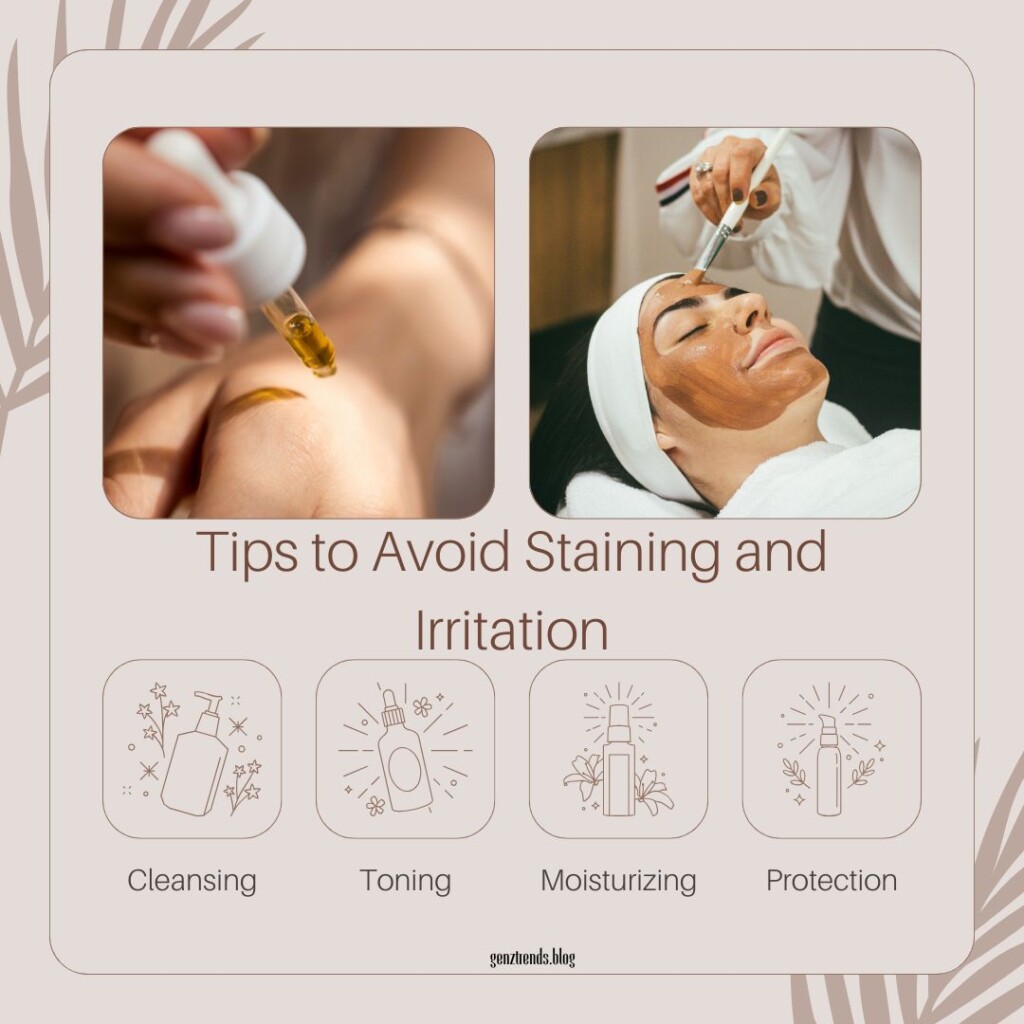
Understanding how to use turmeric safely is essential — both for protecting your skin from any adverse reactions and for protecting your skin (and surfaces) from turmeric’s notorious staining properties. These practical safety guidelines make the difference between a beneficial treatment and an avoidable frustration.
\
PATCH TEST FIRST
Before applying any turmeric face mask to your full face, perform a 24-hour patch test. Apply a small amount of the prepared mixture to the inside of your wrist or behind the ear. Leave for the intended mask duration, rinse, and monitor for 24 hours. If no redness, itching, or irritation develops, proceed with full facial application. This step answers the foundational “is turmeric safe for face” question for your specific skin — patch testing is the only way to know with certainty.
USE SMALL QUANTITY
A thin, even layer of turmeric mask is more effective than a thick application — and it reduces both the staining risk and the amount of active compound on the skin, minimising the chance of overstimulation. One level teaspoon of turmeric powder per recipe batch is generally sufficient for a full-face application.
LIMIT TO 2–3 TIMES WEEKLY
Despite turmeric’s many benefits, turmeric face mask everyday use is not recommended for most skin types. Daily application can lead to curcumin buildup, potential sensitisation, and the temporary yellow staining becoming more persistent. Turmeric mask everyday or turmeric face mask everyday approaches — particularly over extended periods — significantly increase the risk of turmeric face mask side effects, including contact dermatitis in predisposed individuals.
The single exception is extremely gentle formulations used as part of a structured challenge (such as the 5 day turmeric mask or turmeric face mask 5 days protocols), where daily application for a brief, defined period is followed by a rest phase. Even then, daily use should not exceed 5–7 consecutive days without a break.
AVOID LEAVING TOO LONG
The recommended mask duration for most turmeric formulas is 10–20 minutes. Leaving turmeric on the skin for extended periods — beyond 30 minutes — significantly increases the risk of temporary yellow staining of the skin and does not meaningfully increase the skincare benefit. Set a timer and rinse on schedule.
REMOVE GENTLY
Rinse turmeric masks with lukewarm water using light, circular motions. Avoid vigorous rubbing, which can irritate freshly treated skin. If staining occurs on the skin, a gentle wipe with a cotton pad dampened with diluted milk or micellar water will remove turmeric residue without irritating the skin. Use old towels or dark cloths for drying — turmeric stains fabric permanently.
TURMERIC FACE MASK SIDE EFFECTS
Turmeric face mask side effects are generally mild and uncommon when used correctly. The most frequently reported include: temporary yellow skin staining (cosmetic, not harmful, resolves with gentle cleansing); mild irritation in very sensitive individuals (addressed by reducing turmeric concentration and adding a buffer like aloe vera or yogurt); and contact allergic dermatitis in those with specific turmeric or curcumin allergies (rare — addressed by patch testing).
Is Turmeric Face Mask Good for All Skin Types?
One of the most impressive qualities of turmeric as a skincare ingredient is its versatility — with appropriate formula selection and technique, it delivers genuine benefits across virtually every skin type.
OILY SKIN
Oily skin is perhaps the skin type that benefits most immediately from a turmeric face mask. Its sebum-regulating, antibacterial, and anti-inflammatory properties address all three primary challenges of oily skin simultaneously. For oily skin, use the yogurt or lemon-based recipes (Recipes 2 and 4) and apply 2–3 times per week. The effective turmeric face mask for oily skin is one that combines turmeric’s regulation with complementary oil-absorbing ingredients.
DRY SKIN
Dry skin benefits from turmeric’s antioxidant protection and brightening properties but requires a richer carrier ingredient to prevent further dryness during application. The honey-based Recipe 1 is ideal, with an additional teaspoon of olive or jojoba oil added for extra nourishment. Use once to twice per week to avoid over-drying, and always follow with a rich moisturiser immediately after rinsing.
SENSITIVE SKIN
Sensitive skin can benefit from turmeric but requires a careful approach. Begin with the aloe vera-based Recipe 3, reduce turmeric concentration to half a teaspoon, and use only once per week. Always patch test first, and discontinue if any irritation or persistent redness develops. A good turmeric face mask for sensitive skin is one that errs heavily toward the soothing, calming, buffering ingredients rather than active brightening ones.
ACNE-PRONE SKIN
Acne-prone skin is one of turmeric’s most appropriate applications — its antibacterial, anti-inflammatory, and sebum-regulating properties address the entire acne cycle comprehensively. Use the honey-based recipe for this skin type, apply directly to active (closed) breakouts, and maintain consistent 2–3 times weekly frequency. Avoid applying to open or ruptured blemishes. Turmeric face mask reviews from acne-prone users are consistently among the most positive of any skin type.
COMBINATION SKIN
Combination skin — oily in the T-zone, drier on the cheeks — responds well to all four recipes, with the yogurt-based Recipe 2 being particularly appropriate as yogurt regulates oiliness in oily areas while its protein content nourishes drier areas. Apply uniformly, allow to work for 15 minutes, and rinse well.
What is turmeric face mask good for in a general sense? For virtually every skin type, in one way or another — the key is choosing the right complementary ingredients for your specific skin concern.
Frequently Asked Questions About Turmeric Face Mask
IS TURMERIC FACE MASK GOOD FOR GLOWING SKIN?
Yes — and it is one of the most effective natural ingredients available for achieving genuine glow. The benefits of turmeric mask on face for radiance include tyrosinase inhibition for brightening, antioxidant protection for clarity, anti-inflammatory calming for even tone, and exfoliation (with appropriate co-ingredients) for luminous surface texture. Turmeric mask benefits for skin glow are visible from the first application and improve progressively over weeks. The glow turmeric mask effect — that immediate post-application radiance — is one of the most reliably reported first-impression benefits of this ingredient.
CAN I USE TURMERIC FACE MASK DAILY?
This is one of the most important safety questions about this ingredient. Turmeric mask everyday use is not recommended for the vast majority of skin types. Daily application risks cumulative sensitisation, persistent yellow skin staining, and disruption of the skin’s natural barrier function. The recommended frequency is 2–3 times per week for most skin types, reducing to once or twice per week for dry or sensitive skin. Structured short-term challenges — like turmeric mask everyday for a week or turmeric face mask for a week protocols — should be followed by appropriate rest periods and approached only by non-sensitive skin types.
DOES TURMERIC LIGHTEN SKIN?
Turmeric supports a brighter, more even complexion through curcumin’s documented tyrosinase-inhibiting action — it does not bleach the skin or alter baseline skin tone, but gradually fades the excess pigmentation caused by sun exposure, hormonal changes, and post-inflammatory hyperpigmentation. The turmeric face mask before and after results for lightening show meaningful progressive improvement in pigmentation evenness over 4–8 weeks of consistent use. The distinction is important: turmeric brightens and evens — it does not lighten in the way that bleaching agents do.
HOW LONG DOES TURMERIC TAKE TO SHOW RESULTS?
Immediate results — the post-mask glow, temporary skin softening, reduced redness — are visible after the first application. Progressive brightening and texture improvement develop over 2–4 weeks of consistent 2–3 times weekly use. Significant dark spot fading and tone-evening improvement requires 6–8 weeks of consistent application. For structural benefits like collagen support and improved elasticity, meaningful improvement is typically visible after 8–12 weeks. The turmeric face mask 30 days and turmeric face mask 1 month user testimonials consistently confirm these timelines.
CAN TURMERIC REMOVE ACNE SCARS?
Turmeric can meaningfully reduce the appearance of post-acne marks — the dark, reddish, or brown discolouration left after a breakout heals — through its combined tyrosinase inhibition, anti-inflammatory action, and collagen-stimulating properties. True acne scars (textural changes: pitting, indentations, raised hypertrophic scars) require more intensive treatments than any topical mask alone can provide. However, for the flat discolouration that most people call “acne scars,” turmeric is a genuine and effective natural treatment. The turmeric face mask before and after acne mark results, particularly when using the honey or yogurt-based recipes, consistently show meaningful improvement over 6–8 weeks of weekly application.
CONCLUSION
The 9 amazing turmeric face mask benefits revealed in this guide make one thing unmistakably clear: this is not a trendy ingredient that will fade from skincare culture as quickly as it arrived. Turmeric has been transforming skin for over 4,000 years — and the modern scientific research into curcumin’s mechanisms is simply explaining, in molecular detail, what Ayurvedic practitioners have known all along.
The turmeric mask benefits cover a remarkable span of skin concerns: brightening dull complexion, reducing acne, fading dark spots, controlling oil, soothing redness, delaying aging, improving texture, evening skin tone, and enhancing natural radiance — all from a single, natural ingredient that costs a fraction of the commercial alternatives.
The effective turmeric face mask is not about finding the most elaborate recipe or the most concentrated product. It is about using high-quality turmeric — organic turmeric face mask preparations made from pure, unadulterated powder are significantly more potent than many processed commercial versions — consistently, safely, and with appropriate complementary ingredients for your skin type.
The turmeric mask review consensus from thousands of real users — whether they tried a turmeric face mask for a week, a turmeric face mask 30 days challenge, or simply incorporated it as a regular twice-weekly step in their routine — tells a consistent story: genuine improvement in brightness, clarity, and overall skin health, achieved gradually and sustainably through a simple, natural ingredient.
Start with one of the four recipes in this guide. Choose the one that speaks most directly to your primary skin concern. Be consistent. Be patient. And allow the golden intelligence of this ancient herbal skin treatment to work its quiet, cumulative magic on your skin.
Your clearest, most radiant skin is not out of reach — it is one turmeric mask away from beginning.